Leave Your Message

What Is Acoustic Insulation and What Types Are Available?

Noise can travel through a wall, under a door, or along a shared floor. Acoustic Insulation describes methods that reduce sound transmission between spaces. It matters in homes, schools, offices, and healthcare settings, where speech privacy and restful rooms are practical needs. Quiet matters. Yet insulation is not the same as sound absorption: insulation limits sound passing through a building element, while absorption reduces reflections inside a room.

The World Health Organization’s Environmental Noise Guidelines for the European Region (2018) recommend reducing road traffic exposure below 53 dB Lden and 45 dB Lnight. These are health-based environmental recommendations, not product ratings or guarantees for indoor quiet. Still, they show why designers examine both noise sources and building assemblies. A thin partition, an unsealed cable opening, or a hollow door can undermine otherwise substantial improvements.

Available solutions include mineral wool within wall or ceiling cavities, resilient channels that decouple surfaces, dense barriers, and acoustic sealants around gaps. Some products absorb sound; others add mass or interrupt vibration. The best choice depends on the sound, the structure, and the installation. A traffic-facing bedroom may need different measures from a meeting room with echo. Even high-rated materials can disappoint when flanking paths remain untreated. That part is easy to miss. This guide explains common insulation types, how their performance is assessed, and what to consider before choosing a solution.

What Is Acoustic Insulation and What Types Are Available?

What Acoustic Insulation Is

Acoustic insulation is a set of materials and construction methods that reduces sound passing between spaces. It can limit airborne noise, such as speech or television, and impact noise, such as footsteps on a floor. Sound travels through air and solid structures, so effective control often needs more than a layer of soft material.

Dense wall or floor layers can block some sound, while fibrous insulation inside a cavity can reduce sound energy moving through it. Sealing gaps around doors, pipes, and outlets also matters. Small gaps matter. Acoustic insulation is not the same as sound absorption: curtains or panels may reduce echo inside a room without preventing much noise from entering it. Results depend on the whole assembly, including framing, joints, and installation quality. A promised “quiet room” is unrealistic if sound can travel around the insulated section.

Tip: Identify the main noise path before choosing materials. If voices pass through a shared wall, inspect the wall and its edges; if footsteps are the problem, floor construction may be the bigger issue. Check product test data and local building requirements, and remember that even careful work may not eliminate every sound.

How Acoustic Insulation Controls Sound

Acoustic insulation controls sound by reducing how much vibration travels from one space into another. A voice creates pressure waves that move through air, then make walls, floors, or ceilings vibrate. Insulation helps limit this transfer, but no single material blocks every sound equally well.

Dense layers, such as plasterboard, add mass and can make a partition harder to vibrate. Porous materials, including mineral wool or fiberglass, trap some sound energy within their fibers. They work inside a wall cavity, not as exposed wall coverings. Small gaps matter. Sound can leak around electrical outlets, door edges, and poorly sealed joints, so careful fitting is important.

A second method is separating surfaces. Resilient channels or isolated framing can reduce direct vibration between wall layers, though poor installation may weaken the result. Thick rugs can soften footsteps in a room, but they will not reliably stop voices passing through a shared wall. Sound is stubborn. Low bass often travels through building structure, while higher voices may pass through air gaps. The right approach depends on the sound source, the room, and the construction. Even well-installed insulation may leave some sound audible; expecting silence is probably unrealistic.

The Main Types of Acoustic Insulation

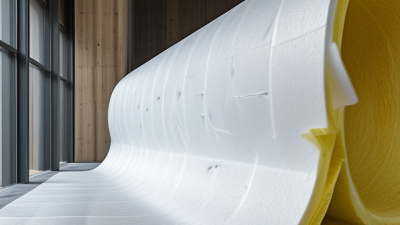
The main types of acoustic insulation include batts, loose-fill materials, foam, and sound-blocking layers. Mineral wool and fiberglass batts fit between wall studs or ceiling joists. Their porous fibers absorb some sound energy inside the cavity. They can reduce noise traveling between rooms, but the finished wall’s layers and gaps matter too. No single material fixes every room.

Loose-fill cellulose can fill irregular cavities, while acoustic foam panels are usually fitted to room surfaces. Foam helps control echoes and harsh reflections, especially in recording or practice spaces. It does not, by itself, stop much sound passing through a wall. Dense barriers, such as specialized sound-blocking sheets, add mass; resilient channels can help separate drywall from framing and limit vibration. These approaches work best as parts of a complete assembly.

Tips: Match the material to the problem. For voices through a shared wall, inspect gaps around outlets and doors before adding insulation. For a lively room, try absorptive panels at reflection points. Small details matter. It is easy to focus on the insulation product and overlook flanking paths, such as sound traveling through a ceiling or floor. Check the whole room, not just one cavity.

Common Materials Used for Sound Insulation

Fiberglass and mineral wool are common cavity absorbers. Their open, fibrous structure slows sound moving through wall cavities, while also fitting around pipes and electrical boxes. They do not block sound by themselves. In its building-acoustics guidance, Canada’s National Research Council explains that insulation works as part of a complete wall assembly, alongside mass, airtightness, and separation between layers. Small gaps matter.

Cellulose, usually blown into cavities, can fill awkward spaces around framing, though installation quality affects coverage. Foam insulation may seal air leaks, but an airtight layer is not automatically a strong sound barrier. That distinction matters. ASTM E90 measures sound transmission through a complete wall or floor assembly, and ASTM E413 uses those results to assign an STC rating; neither standard rates a loose batt as if it were a finished wall. Compare tested assemblies, not just material labels. A practical example: a dense mineral-wool batt in a properly sealed wall may perform differently from the same batt beside an unsealed outlet or hollow door. The numbers need context. One report may test a carefully built laboratory sample, not the wall in your home.

What Is Acoustic Insulation and What Types Are Available? - Common Materials Used for Sound Insulation

Acoustic insulation uses materials and building assemblies to reduce sound transmission or control sound reflections. The best choice depends on whether the goal is to block sound between spaces, absorb reverberation within a room, or do both.

Material or System How It Works Common Applications Advantages Considerations
Fiberglass batts Porous fibers absorb some sound energy in wall, floor, and ceiling cavities. Stud walls, ceilings, and floors between framing members. Widely available, lightweight, and also used for thermal insulation. Works as part of a complete assembly; by itself, it does not seal gaps or provide substantial sound blocking.
Mineral wool Dense, fibrous material absorbs sound within cavities and can reduce sound resonance in a partition. Interior walls, floors, ceilings, and some acoustic panel cores. Available in cavity-fill and board forms; many products offer fire-resistant properties. Performance depends on the full wall or ceiling design, installation, and control of air gaps.
Cellulose insulation Loose-fill or dense-packed fibers fill cavities and help absorb sound within the assembly. Enclosed wall cavities, attics, and retrofit projects. Can be installed in some existing cavities with limited wall opening. Correct density and even installation matter; it does not replace airtight construction or mass.
Acoustic foam Open-cell foam absorbs some reflected sound, especially in the mid and high frequency range. Studios, practice rooms, and spaces where echo or reverberation needs control. Lightweight and easy to apply to interior surfaces. Primarily treats sound inside a room; it is generally not a substitute for a sound-blocking wall or ceiling.
Mass-loaded vinyl (MLV) A flexible, dense sheet adds mass to a barrier and can help reduce airborne sound transmission when installed continuously. Walls, ceilings, floors, and equipment enclosures as part of a designed assembly. Flexible and useful where a dense layer is needed without a rigid board. Seams, edges, penetrations, and supporting construction must be addressed; it does not absorb room echo on its own.
Gypsum board A heavy, continuous sheet contributes mass to a wall or ceiling, helping limit airborne sound transmission as part of an assembly. Interior partitions, ceilings, and layered wall systems. Common building material that can be combined in multiple layers or with cavity insulation. Joints and openings need careful sealing; framing and installation details affect overall performance.
Resilient channels or isolation clips Mechanically separate a finish layer from framing to reduce direct vibration transfer when correctly installed. Walls and ceilings where decoupling is part of the sound-control design. Can reduce structural connections between layers without rebuilding an entirely separate wall. Incorrect fastening or accidental bridging can reduce effectiveness; installation details are critical.
Acoustic panels Fabric-covered porous cores absorb reflected sound and help reduce reverberation in a room. Offices, classrooms, meeting rooms, studios, and home theaters. Available in wall-mounted and suspended forms; helps improve room acoustics. Reduces reflections inside a space rather than blocking most sound from passing through walls.
Acoustic sealant and weatherstripping Closes small air gaps around joints, outlets, doors, and windows that can allow sound leakage. Perimeters of walls, doors, windows, and service penetrations. Addresses leakage paths that may undermine otherwise solid construction. Sealing alone cannot compensate for a lightweight or poorly constructed barrier.

Important: Sound transmission ratings apply to tested assemblies, not just to individual materials. Absorption ratings describe how a material manages reflected sound in a room; they do not by themselves indicate how much sound a wall or floor will block.

How to Choose Acoustic Insulation for Different Spaces

Choosing acoustic insulation starts with finding where noise travels. Voices and television pass through walls, while footsteps often travel through floors and ceilings. The distinction matters. Insulation inside a cavity can help reduce airborne noise, but it will not fix every vibration. Mineral wool or dense cellulose can fit between wall studs or ceiling joists; careful installation leaves no gaps around pipes or edges.

For a bedroom beside a busy living room, improve the shared wall and seal openings around outlets and trim. In a home office, treat the wall facing the loudest source, then consider a door with a solid core and tight seals. Small gaps count. For upstairs footfall, a resilient floor underlay may help more than adding insulation to the ceiling alone. In a recording space, wall insulation can limit sound passing between rooms, while absorptive panels reduce echo inside the room. They do different jobs.

Tips: Match the material to the cavity depth and moisture conditions. Check for wiring and pipes before opening a wall. If possible, test one section first; results can be uneven, and I would not assume thicker insulation always means quieter rooms. Seal edges carefully, and ask a qualified installer when the construction is unclear.