Choosing a reliable Waterproof Board supplier in China requires more than comparing catalog prices. Product quality can vary by core material, surface treatment, thickness tolerance, and production control. A board that performs well in a dry showroom may fail near bathrooms, kitchens, roofs, or outdoor walls.
This guide examines China’s top 10 Waterproof Board suppliers through practical purchasing criteria. These include manufacturing experience, certification records, export capability, product customization, and customer support. We also consider factory capacity, quality inspection procedures, packaging details, and response speed. Small details matter. A protected edge, sealed pallet, or accurate thickness can prevent costly installation problems.
The selection reflects publicly available information and common buyer requirements. Supplier rankings may change as factories expand, certifications expire, or service quality develops. That limitation deserves attention. No single list can replace sample testing and technical verification. Buyers should request test reports, product datasheets, batch information, and clear warranty terms before placing large orders.
Real projects need evidence. For example, a contractor may compare water absorption after repeated exposure, while a distributor may focus on container loading and damage rates. Different applications require different board structures. Some suppliers may offer stronger performance, but their minimum order quantities could be unsuitable for smaller projects. Others may provide flexible customization, yet need closer quality supervision.
This introduction sets a practical direction for evaluating leading Chinese manufacturers. It aims to help importers, builders, architects, and wholesalers make more informed decisions. The strongest supplier is not always the cheapest. It is the one that consistently matches performance, documentation, delivery, and after-sales expectations.
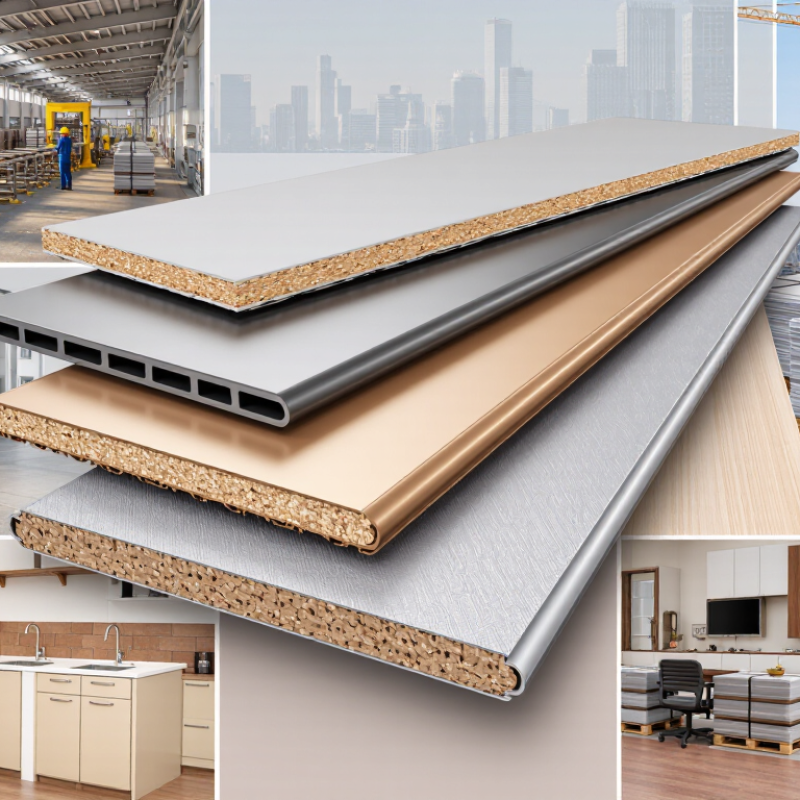
A credible top-ten ranking should measure more than factory size or online visibility. I would assess waterproof performance, raw-material consistency, production capacity, and quality-control records. Laboratory results should cover water absorption, dimensional stability, bending strength, and aging resistance. Product samples also deserve independent testing.
The data should come from several verifiable sources. These include supplier technical files, factory audit reports, accredited laboratory certificates, export documentation, and long-term buyer feedback. Site visits can reveal practical details, such as sealed storage areas, batch labels, testing equipment, and packaging damage. Trade directories help locate candidates, but they should not decide the ranking alone.
Scoring must remain transparent. Product quality could receive the highest weight, followed by delivery reliability, customization ability, production scale, technical support, and complaint handling. Public records may be incomplete. Buyer reviews can also be biased. No ranking is perfect. I would record each source date, compare repeated evidence, and separate confirmed facts from supplier claims. A supplier with attractive prices may still lose points if test results are outdated or batch traceability is weak. This method favors dependable performance over polished marketing.
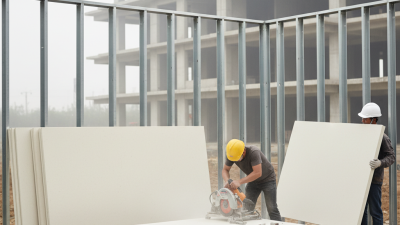
When screening China’s top ten waterproof board suppliers, compare density, thickness, and water absorption before comparing prices. Density affects stiffness, screw holding, weight, and transport cost. Low-density boards are easier to cut, but may dent around corners. High-density boards feel solid, yet they can increase dead load. A sample tells more than a catalogue.
Thickness should match the installation, not merely the advertised strength. Thin sheets suit wall lining and protected cabinetry. Thicker panels are safer for floors, partitions, and areas exposed to repeated impact. Measure several points with a caliper because edge swelling can hide variation. It happens. Ask for production tolerances, core composition, and test reports from an independent laboratory. Reliable suppliers should explain whether absorption data comes from a 24-hour immersion test, surface exposure, or another method. Those methods are not interchangeable.
Water absorption deserves careful reading. A board may resist liquid on its face but absorb water through cut edges and fastener holes. Seal those points during installation. Compare percentage weight gain, dimensional change, and drying behavior after testing. In humid bathrooms or exterior service, lower absorption and stable dimensions usually matter more than maximum density. Still, “waterproof” is often used loosely. It does not replace membranes, drainage, or correct joint detailing. Request batch samples, traceable certificates, packaging details, and after-sales responses before placing a large order. Small checks prevent expensive surprises, although they cannot remove every risk.
China Top 10 Waterproof Board Suppliers: Supplier Profiles, Products, Annual Capacity, Certifications, and Export Markets
China’s leading waterproof board suppliers usually offer phenolic plywood, marine plywood, cement boards, PVC foam boards, and coated panels. Product selection matters because bathrooms, façades, transport interiors, and marine applications require different water-resistance levels. Supplier profiles should state thickness ranges, core materials, surface treatments, and formaldehyde classifications. The FAO Forestry Production and Trade database reports plywood output in cubic metres, helping buyers compare national production trends with factory claims. Capacity is not always comparable.
Annual capacity should be verified through production lines, shift patterns, and recent shipment records. A practical profile may report 30,000 to 100,000 cubic metres yearly, but figures are often self-declared. Request test samples, batch records, and third-party water-absorption results. ISO 9001 supports process control, while ISO 14001 indicates environmental management. Neither certificate proves perfect board performance. That distinction matters.
Export-market coverage also reveals operational experience. Check whether suppliers regularly ship to Southeast Asia, the Middle East, Europe, North America, or Africa. Customs data under HS 4412 can help confirm plywood export activity, although product classification may vary. Look for CE or other destination-specific documentation when projects require it. Reports from the International Trade Centre can support shipment and market checks. Some profiles still omit failure rates and warranty data. That gap deserves careful questioning.
| Profile | Primary Waterproof Board Products | Typical Thickness Range | Estimated Annual Capacity | Certifications and Standards | Main Export Markets | Typical Applications | Procurement Notes |
|---|---|---|---|---|---|---|---|
| Supplier Profile 01 | Fiber-cement boards; exterior sheathing panels; facade substrate boards | 4–24 mm | 40,000–80,000 m³/year | ISO 9001; CE-related documentation where applicable; EN 12467 testing commonly available | Europe, Middle East, Southeast Asia, Australia | Ventilated facades, partitions, roof soffits, exterior wall systems | Suitable for projects requiring non-combustible or moisture-resistant sheet materials |
| Supplier Profile 02 | Film-faced waterproof plywood; construction plywood; formwork panels | 9–30 mm | 60,000–120,000 m³/year | ISO 9001; FSC Chain of Custody options; EN 636 or equivalent plywood testing | North America, Europe, Africa, Middle East | Concrete formwork, flooring substrates, transport flooring, temporary structures | Confirm veneer species, glue emission class, film weight, and panel reuse cycles |
| Supplier Profile 03 | PVC foam boards; celuka PVC sheets; low-water-absorption panels | 3–30 mm | 25,000–55,000 tonnes/year | ISO 9001; RoHS test reports; REACH declarations commonly available | Europe, North America, Latin America, Southeast Asia | Signage, bathroom cabinetry, interior cladding, display fixtures | Check density, surface finish, flame rating, dimensional tolerance, and recycling content |
| Supplier Profile 04 | Magnesium oxide boards; fire-resistant sheathing; prefabricated wall panels | 6–20 mm | 30,000–70,000 m³/year | ISO 9001; ASTM E136 or equivalent fire-test documentation; selected project approvals | North America, Europe, Australia, Middle East | Fire-rated partitions, exterior sheathing, modular buildings, ceiling systems | Verify chloride content, corrosion behavior, water resistance, and long-term stability |
| Supplier Profile 05 | Oriented strand board with moisture-resistant bonding; structural panels | 6–25 mm | 50,000–100,000 m³/year | ISO 9001; FSC options; EN 300 or comparable structural-panel testing | Europe, Central Asia, Middle East, Southeast Asia | Roof decking, wall sheathing, packaging, temporary construction works | Select the correct service class and confirm swelling performance after wetting |
| Supplier Profile 06 | WPC boards; wood-polymer exterior panels; hollow and solid decking boards | 8–25 mm for sheets; 20–35 mm for decking | 15,000–35,000 tonnes/year | ISO 9001; RoHS and REACH documentation; EN 15534 testing often available | Europe, North America, Australia, Japan, Southeast Asia | Outdoor decking, balcony screens, garden structures, exterior wall decoration | Review UV resistance, slip rating, thermal expansion, and recycled-polymer percentage |
| Supplier Profile 07 | Calcium silicate boards; high-density moisture-resistant panels; fire-rated boards | 4–25 mm | 35,000–75,000 m³/year | ISO 9001; ISO 14001 options; EN 13501-1 and related fire-performance reports | Europe, Middle East, India, Southeast Asia | Fire-rated walls, tunnel linings, industrial ceilings, wet-area partitions | Confirm density, edge strength, water absorption, and cutting-dust controls |
| Supplier Profile 08 | Waterproof gypsum boards; moisture-resistant drywall; laminated wall panels | 9–15 mm | 20,000–50,000 m³/year | ISO 9001; ASTM C1396 or EN 520 testing; indoor-air-quality documentation where available | Southeast Asia, Middle East, Africa, Eastern Europe | Bathrooms, kitchens, residential partitions, commercial interiors | Not intended for continuous direct water exposure; confirm installation-system requirements |
| Supplier Profile 09 | Phenolic-coated plywood; anti-slip waterproof panels; vehicle-floor boards | 12–30 mm | 45,000–90,000 m³/year | ISO 9001; FSC options; EN 636, EN 13986, or project-specific test reports | Europe, North America, Australia, Middle East | Truck floors, trailers, scaffolding, industrial platforms, reusable formwork | Specify anti-slip pattern, bending strength, panel weight, and edge-sealing method |
| Supplier Profile 10 | Composite waterproof panels; aluminum-faced core boards; insulated building panels | 10–100 mm overall panel thickness | 10,000–30,000 tonnes/year | ISO 9001; ISO 14001 options; ASTM, EN, or project-specific fire and thermal tests | Europe, North America, Middle East, Africa, Latin America | Cold rooms, cleanrooms, prefabricated buildings, facade and roof systems | Compare core type, thermal conductivity, fire classification, panel flatness, and joint design |
China Top 10 Waterproof Board Suppliers?
A reliable supplier should prove more than a low-price quotation. In a technical benchmark, water absorption should remain at or below 0.5% after standardized immersion testing. This figure matters because trapped moisture can weaken bonding layers and increase freeze-thaw damage. Ask for recent laboratory reports, not recycled brochures. Check sample numbers, test dates, conditioning methods, and measured results.
Flexural strength deserves equal attention. A board may resist water but crack during transport, cutting, or installation. Compare strength in both dry and wet conditions. Review thickness tolerance, density consistency, and failure patterns from multiple batches. Factory audits can reveal practical details, such as covered storage, calibrated testing equipment, and trained quality inspectors. Small details matter.
Service life is harder to verify. Suppliers should provide accelerated aging data, wet-dry cycle results, and clear installation guidance. Field references from humid buildings offer stronger evidence than simple laboratory claims. Our early screening mistake was trusting one excellent sample. Later batches performed differently. That experience changed our method. We now test samples from different production dates and inspect edge absorption after cutting. The strongest supplier is not always the largest one. It is the supplier that shares limitations, controls variation, and supports performance after delivery.
China Top 10 Waterproof Board Suppliers?
A supplier list is only a starting point. The purchasing checklist matters more. Confirm which GB/T standard applies to the board’s material, thickness, and intended use. Do not accept “GB/T compliant” as a complete answer. Request the standard number, test date, sample dimensions, and laboratory details. Check whether the report covers water absorption, dimensional stability, bending strength, and durability. A report for one thickness may not represent another.
Ask for production samples before signing a large order. Record the surface finish, edge condition, density, and measured thickness. Test several pieces after water exposure, not only one attractive sample. Third-party testing adds cost, but it can reveal swelling or delamination hidden by packaging. I have seen specifications copied between quotations. That is a warning sign.
MOQ should match your trial budget and storage capacity. Confirm whether mixed sizes count toward the MOQ. Request a written lead time, including production, inspection, and export preparation. Ask what happens when raw material shortages delay shipment. Warranty terms should state coverage, claim evidence, response time, and replacement responsibility. Clarify whether installation conditions affect coverage. Some suppliers promise long warranties but provide vague exclusions. That weakness deserves negotiation. Keep approved samples, drawings, inspection records, and email commitments together. A small documentation gap can become an expensive dispute.
Recommended buyer-side evaluation weighting for comparing suppliers without using company or brand data. Verify applicable GB/T compliance, independent test reports, MOQ, lead time, and warranty terms before placing an order.