Top 7 Moisture Resistant Panels For Bathrooms You Should Know?
In the realm of bathroom design, selecting the right materials is crucial. A significant aspect involves the choice of moisture-resistant panels for bathrooms. According to the National Kitchen and Bath Association (NKBA), over 60% of homeowners prioritize durability when renovating these spaces. Bathrooms are prone to humidity, leading to mold and mildew growth. Hence, using moisture-resistant materials is essential for maintaining aesthetics and hygiene.
Moisture-resistant panels for bathrooms provide an effective solution. They protect walls from the damaging effects of water. A recent report from Grand View Research indicates that the global bathroom panel market is projected to grow significantly, driven by the increasing demand for sustainable and functional products. This growth showcases a shift towards innovative materials that ensure longevity.
However, not all panels offer the same level of protection. Some products claim moisture resistance but may fall short in real-world applications. It’s vital for consumers to assess options carefully. Investing in high-quality moisture-resistant panels ensures not only beauty but also peace of mind. Ultimately, making informed choices leads to a healthier, more appealing bathroom environment.
Top 7 Moisture Resistant Panels for Bathrooms: An Overview
In modern bathroom design, moisture resistant panels are essential. They not only protect against dampness but also enhance the aesthetic appeal. According to industry data, about 30% of moisture-related damage occurs in bathrooms, making the choice of materials critical.
When selecting panels, consider materials like fiberglass, PVC, or treated wood. These options can withstand high humidity. For instance, fiberglass panels are known for their durability and low maintenance. However, they often require precise installation to avoid gaps that can lead to moisture penetration.
Tips: Always check the manufacturer's specifications. Installing panels without proper sealing can defeat their purpose. Another key point is to assess the installation environment. Even the best quality panels can fail if not installed in accordance with recommended practices.
Remember, mold is a common issue in bathrooms. A report from the Environmental Protection Agency (EPA) states that damp environments can lead to mold growth within 24 to 48 hours. Regular inspections can help maintain your bathroom’s condition. Make informed choices and prioritize moisture resistance to create a lasting bathroom space.
Top 7 Moisture Resistant Panels for Bathrooms
Understanding Moisture Resistance Ratings in Bathroom Panels
When selecting bathroom panels, understanding moisture resistance ratings is crucial. These ratings indicate how well a panel can withstand humidity and water exposure. Panels classified as waterproof are often the best choice for high-moisture areas. However, not all panels marketed as moisture-resistant are created equal. It's important to look at the specific ratings and test results.
Different materials offer various levels of moisture resistance. For instance, fiberglass-reinforced panels can withstand water better than traditional drywall. They are often used in shower areas and near tubs. On the other hand, MDF panels, while attractive, may swell or warp if exposed to water over time. This raises questions about their long-term reliability in a wet environment.
Moisture resistance ratings also reflect the panel's durability over time. Some panels might perform well initially but degrade quickly. Regular maintenance can extend their lifespan, but it requires diligence. Homeowners should be aware that even moisture-resistant panels require periodic checks for damage. Making informed choices can help prevent future issues and costly repairs.
Key Features to Consider When Selecting Bathroom Panels
When selecting moisture-resistant panels for bathrooms, several key features deserve attention. One critical aspect is material composition. Panels made from high-density fiberboard (HDF) or PVC are often preferred. They excel in resisting humidity and are less likely to warp over time. An industry report suggests that panels with a thickness of 8mm or more provide better durability and insulation, making them ideal for shower areas.
Another vital consideration is ease of installation. Many panels now come with click-lock systems, reducing the need for adhesives. This can shorten installation time significantly. According to a 2022 study by the Building Research Association, proper installation impacts the lifespan of bathroom panels by up to 30%. Therefore, understanding how panels fit together is crucial for consumers.
Finally, the finish of the panel is worthy of examination. Glossy finishes reflect light, making spaces appear larger. Textured finishes, however, offer better grip and feel warm to the touch. Homeowners should also think about maintenance. While some finishes are easier to clean, they may show wear faster. Balancing aesthetics and functionality remains a challenge and requires careful thought during selection.
Top Materials Used for Moisture Resistant Bathroom Panels
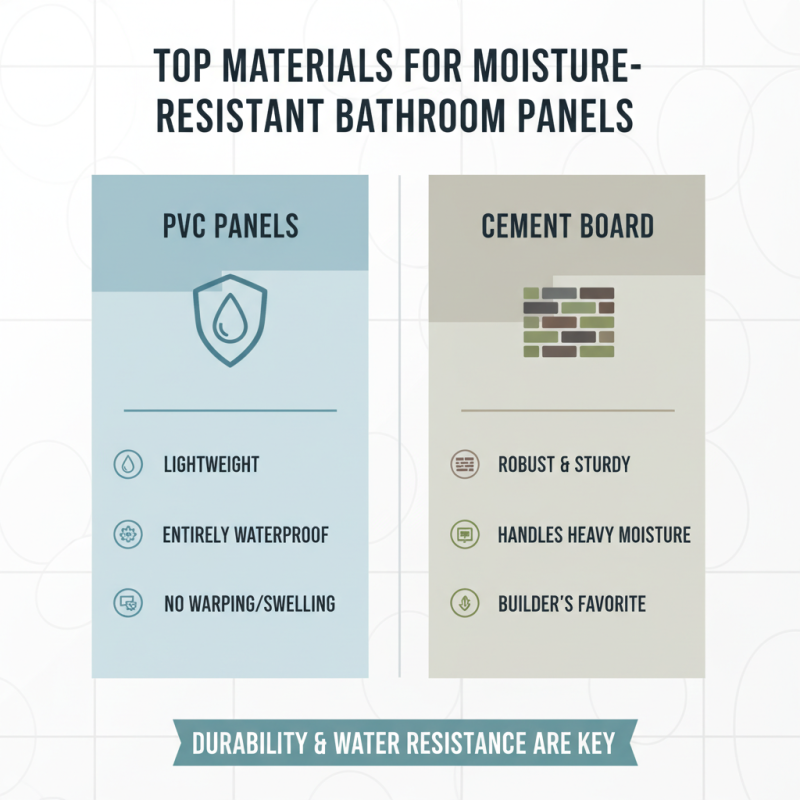
When considering materials for moisture-resistant bathroom panels, it's essential to focus on durability and water resistance. One popular option is PVC panels. They are lightweight and entirely waterproof. They won’t warp or swell, making them ideal for high-humidity environments. Another option is cement board, known for its sturdiness. This material can handle heavy moisture and is a favorite among builders for its reliability.
Fiber cement panels are becoming more common as well. They provide an attractive finish and resist mold and mildew. Though they may be heavier, their long lifespan is often worth the extra effort. Acrylic panels are a great choice for those wanting a sleek look. They are simple to clean and resistant to staining. However, they can scratch more easily than other materials, necessitating careful maintenance. Understanding the pros and cons of these materials can enhance your renovation process and improve bathroom functionality.
Industry Insights: Benefits of Using Moisture Resistant Panels in Bathrooms
Moisture resistant panels offer many benefits in bathroom spaces. They reduce the risk of mold and mildew, which can thrive in damp conditions. Reports show that about 30% of bathrooms in the U.S. experience these issues due to inadequate materials. Using moisture resistant panels helps combat this problem effectively.
These panels are designed to withstand high humidity levels. Their non-porous surfaces prevent water absorption, leading to longer-lasting finishes. According to industry studies, choosing the right materials can extend the lifespan of bathroom installations by 20%. This ultimately leads to lower maintenance costs over time.
Tip: When selecting panels, ensure they have a high moisture-resistant rating. This can significantly impact their durability.
It's worth noting that not all moisture resistant panels are created equal. Factors such as installation quality and environmental conditions also play crucial roles. Verify product specifications and check for installations in similar settings.
Tip: Always consult with professionals to choose the most suitable products for your specific needs.



 Environmental Building Board
 Fire-proof Board
 Sound Resistance
 Termite Resistance