 Environmental Building Board
 Fire-proof Board
 Sound Resistance
 Termite Resistance
Leave Your Message
Choosing the right Roof Board is rarely a simple matter of selecting the thickest or cheapest panel. Global buyers must consider thermal performance, moisture exposure, fire behavior, compressive strength, installation methods, and local supply conditions. A board that performs well on a dry warehouse roof may fail to suit a humid coastal project. Details matter.
This guide examines seven widely used roof board types, including polyiso, XPS, EPS, mineral wool, gypsum fiber, cement board, and wood fiberboard. Each option has practical strengths and visible limitations. Some provide excellent insulation but require careful protection from moisture. Others offer strong fire resistance but add weight, cost, or installation time. There is no universal winner.
Building-science expert Joseph Lstiburek has stated, “The building enclosure is a system.” That principle should guide every roof decision. A Roof Board cannot compensate for poor drainage, weak detailing, or careless fastening. It works as part of a complete roof assembly.
The comparison ahead focuses on real purchasing questions. How does each board handle temperature changes? Can local contractors install it correctly? Will replacement panels be available years later? These questions are sometimes overlooked.
Mistakes happen.
Even experienced buyers may compare laboratory values without checking jobsite realities. Therefore, this overview does not treat “best” as a fixed label. Instead, it connects each Roof Board type with suitable climates, roof systems, budgets, and project risks, helping international buyers make a more informed and defensible choice.
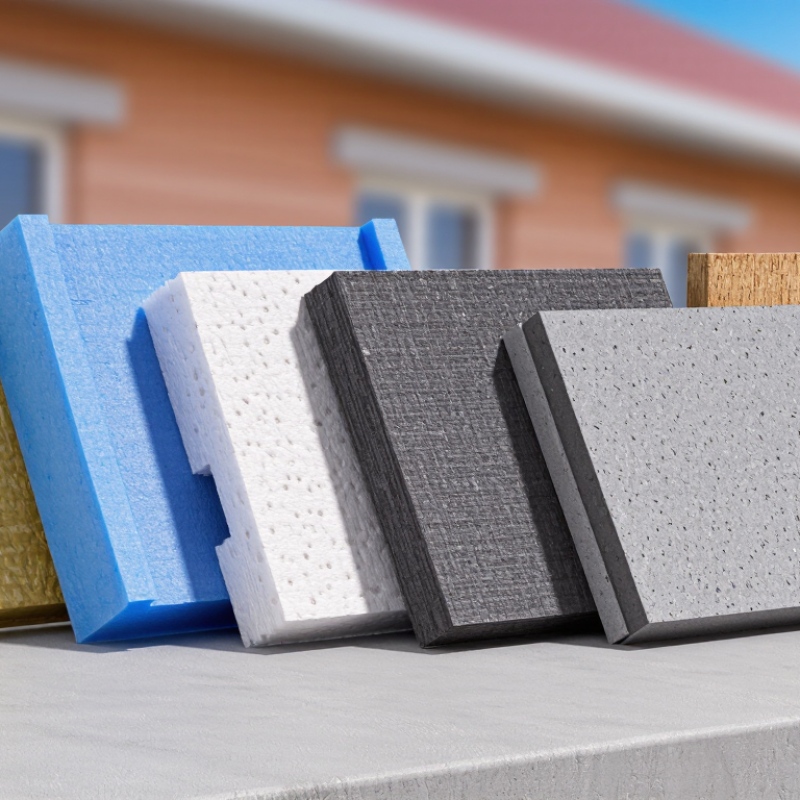
Roof boards form the structural base beneath many modern roofing systems. They sit over rafters or trusses and support underlayment, insulation, and the outer roof covering. Their job is simple but critical: spread loads and provide a secure fastening surface. Snow, wind, workers, and maintenance equipment all depend on this hidden layer. A weak deck can cause movement, loose fasteners, and moisture entry. Small defects matter.
Common options include plywood, oriented strand board, solid wood planks, tongue-and-groove panels, composite boards, metal decking, and concrete decking. Plywood handles fasteners well and performs reliably when properly protected. Oriented strand board offers consistent dimensions and efficient material use. Solid planks suit some older structures, but uneven gaps can complicate installation. Composite boards may improve thermal or moisture performance, yet their approved uses vary. Metal and concrete decks often serve commercial buildings and require compatible fasteners and membranes.
Selection should match the roof span, climate, weight, ventilation design, and local building requirements. Check panel thickness, edge support, moisture exposure, and fastening schedules before installation. On site, damaged edges and swollen panels are common warning signs. Replace them, rather than covering the problem. A practical inspection also looks for sagging, mold, rust, and trapped water. Perfect assumptions rarely survive real weather. Manufacturer instructions and a qualified local professional remain essential, especially for unusual structures or high-wind regions.
| Roof Board Type | Primary Function | Typical Composition | Common Thickness Range | Typical Thermal Conductivity (λ, W/m·K) |
Moisture Behavior | Key Advantages | Main Limitations | Suitable Roofing Systems |
|---|---|---|---|---|---|---|---|---|
| Oriented Strand Board (OSB) | Structural roof sheathing and a continuous substrate for roofing membranes or shingles. | Engineered wood strands bonded with moisture-resistant resin under heat and pressure. | 9–25 mm | Approximately 0.13–0.18 | Grade-dependent; edges and cut surfaces require protection from prolonged wetting. | High structural efficiency | Can swell at exposed edges; requires correct fastener spacing, ventilation, and weather protection. | Asphalt shingles, metal roofing, tiles, and many pitched-roof assemblies. |
| Structural Plywood | Load-bearing roof decking and a stable base beneath various roof coverings. | Cross-laminated wood veneers bonded into panels. | 9–25 mm | Approximately 0.13–0.16 | Better dimensional stability than many solid-wood products, but it must still be kept dry and properly detailed. | Strong and dimensionally stable | Higher cost than some wood-panel alternatives; performance depends on veneer quality and exposure classification. | Low-slope and pitched roofs, metal panels, shingles, tiles, and membrane substrates. |
| Polyisocyanurate (PIR) Board | High-performance thermal insulation, often combined with a separate structural deck. | Rigid closed-cell polyisocyanurate foam with foil, mineral, or composite facings. | 30–200 mm | Approximately 0.022–0.028 | Low water absorption in the foam core; joints, facings, and penetrations still need careful sealing. | Very high insulation value per thickness | Requires compatible membranes and detailing; dimensional and fire performance vary by facing and system design. | Warm roofs, inverted-free roof interfaces where approved, and insulated metal or concrete roof assemblies. |
| Expanded Polystyrene (EPS) Board | Lightweight thermal insulation above or between roof structural layers. | Expanded polystyrene beads fused into a rigid cellular board. | 30–250 mm | Approximately 0.031–0.038 | Generally low water absorption in suitable grades, but prolonged exposure and open joints must be avoided. | Lightweight and cost-efficient | Lower insulation performance per millimetre than PIR; vulnerable to solvents, heat, and mechanical damage unless protected. | Protected membrane roofs, pitched roofs, and composite insulation systems approved for EPS. |
| Extruded Polystyrene (XPS) Board | Moisture-resistant thermal insulation, particularly where compressive strength is important. | Rigid closed-cell extruded polystyrene foam, commonly supplied with smooth or textured surfaces. | 30–200 mm | Approximately 0.029–0.036 | Very low water absorption compared with many open-cell insulation materials; joints and perimeter details remain important. | High moisture resistance and compressive strength | Combustible; limited compatibility with some adhesives, solvents, and high-temperature roof finishes. | Inverted roofs, protected membrane roofs, roof terraces, and areas subject to intermittent moisture exposure. |
| Mineral Wool Roof Board | Thermal insulation, acoustic control, and contribution to fire-resistant roof assemblies. | Stone wool or glass mineral fibers bonded into a rigid or semi-rigid board. | 40–240 mm | Approximately 0.035–0.045 | Often water-repellent, but it must be protected from continuous water ingress and installed with well-sealed membranes. | Excellent fire and acoustic performance | Heavier than foam boards; may require careful handling and adequate structural support. | Commercial flat roofs, metal deck systems, warm roofs, and assemblies requiring enhanced fire performance. |
| Cement-Bonded Particle Board | Rigid sheathing, impact-resistant substrate, and protection layer in demanding roof assemblies. | Wood particles bonded with cement and formed under pressure. | 8–40 mm | Approximately 0.20–0.30 | More moisture-tolerant than many untreated wood panels, but edges, joints, and fixings still require suitable detailing. | Durable and impact resistant | Heavy and less thermally efficient; cutting creates dust and requires appropriate installation controls. | Ventilated roofs, lightweight construction, industrial buildings, and robust substrate applications. |