Leave Your Message

2026 Top Protective Board Types for Global Buyers

As global supply chains become more demanding, buyers need packaging materials that protect goods without creating unnecessary cost or waste. Protective Board remains a practical choice for safeguarding furniture, glass, appliances, panels, machinery, and other sensitive products. Its value depends on more than thickness. Fiber structure, compression strength, moisture resistance, surface finish, and cutting accuracy all affect real-world performance. Small details matter.

This guide examines the leading Protective Board types for global buyers in 2026. Options may include solid fiberboard, corrugated board, honeycomb board, coated board, edge protection board, and reusable composite panels. Each type serves a different purpose. A dense board can resist impact during stacking. A lighter honeycomb panel can reduce shipping weight. Coated surfaces may perform better in humid warehouses or during ocean transport. However, performance claims should be checked through supplier data, sample testing, and application-specific trials.

Experienced purchasing teams usually compare more than unit price. They review load requirements, packaging dimensions, storage conditions, recycling pathways, minimum order quantities, and delivery reliability. They also request traceable material information and consistent quality records. No single board fits every shipment. That assumption is risky. A board that protects a refrigerator may fail around sharp metal parts. Field conditions vary. Even accurate specifications cannot replace a physical test. This overview offers a practical framework for comparing materials, identifying trade-offs, and selecting protection that remains dependable from the factory floor to the customer’s receiving area. Some recommendations may need revision as suppliers improve materials and global packaging expectations continue to change.

2026 Top Protective Board Types for Global Buyers

Protective Board Basics: Classify Types by Material, Density, and Use

Protective boards differ by material, density, and intended use.

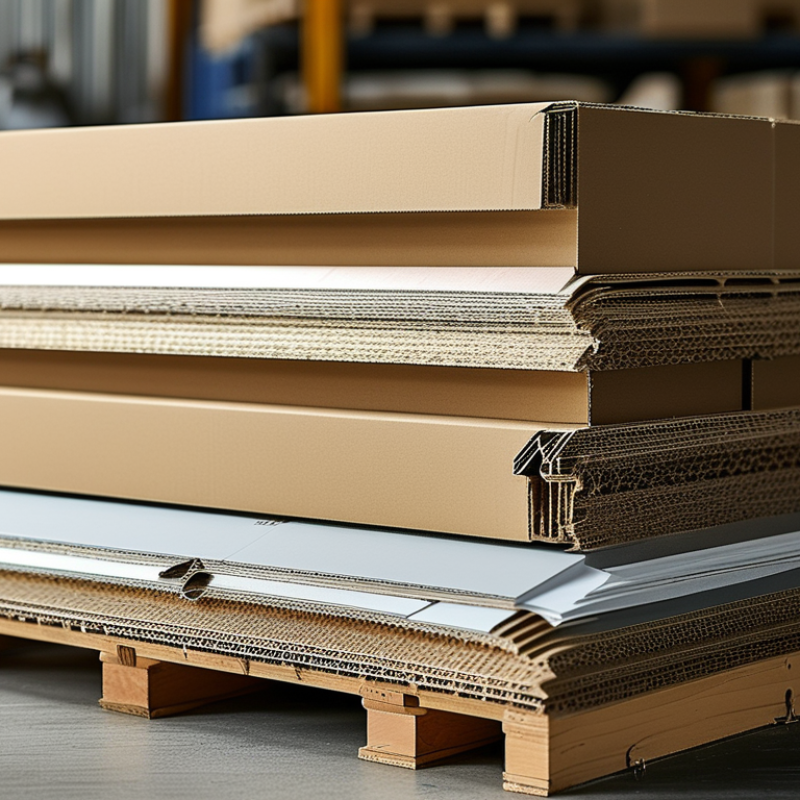
Corrugated fiberboard is light, recyclable, and suitable for cartons or surface separation. Honeycomb paperboard offers thicker cushioning for furniture edges, doors, and large panels. Plastic corrugated board resists moisture and repeated handling. Foam boards provide stronger shock absorption, but their density must match the load. A soft board may compress too quickly beneath a heavy machine.

Density is a practical buying signal.

Low-density boards reduce shipping weight and protect painted surfaces from scratches. Medium-density boards suit stacked parts and warehouse dividers. High-density boards support concentrated pressure, such as metal components with narrow contact points. However, density alone does not prove performance. Compression strength, edge crush strength, moisture exposure, and recovery after impact also matter.

Tips:

Ask suppliers for compression and drop-test data. Check board thickness with a caliper. Test one loaded pallet before placing a large order.

Grand View Research estimated the global protective packaging market at about 30.46 billion US dollars in 2023, with continued growth projected through 2030. This expansion reflects rising demand for safer transport and reduced product damage. Smithers’ protective packaging research also highlights material efficiency and sustainability as key development areas. Yet “recyclable” can be incomplete information. Coatings, adhesives, and mixed materials may affect actual recovery.

In my experience, the cheapest board often looks efficient until humidity enters the warehouse.

Top 2026 Types: PP, HDPE, PVC, OSB, and Fiber-Cement Boards Compared

For global buyers, protective board selection should match the surface, climate, and handling method. PP boards are lightweight, flexible, and resistant to water and many chemicals. They work well as temporary floor or wall protection. HDPE boards offer higher impact resistance and better performance around moisture, but they can feel heavier during installation. Both plastics are easy to clean, although heat and prolonged sunlight may affect their service life.

PVC boards provide a smooth, rigid surface and can be cut with standard tools. They suit interior protection where neat edges matter. OSB boards bring useful stiffness and load distribution, especially beneath stored materials. However, exposed edges may swell when water enters. Fiber-cement boards resist moisture, heat, and impact more effectively than many wood panels. They are also heavier and may release fine dust during cutting, so controlled handling is essential.

No panel wins every test. My initial preference may favor fiber-cement for demanding sites, yet transport costs can change that decision quickly. Buyers should check thickness, weight, bending strength, water absorption, and fire-performance documentation. Ask for current test reports, not only sales descriptions. Small details matter. A thin PP sheet may protect finished flooring, while OSB may protect a loading route from concentrated pressure. The best choice is often less impressive on paper, but more practical at the worksite.

2026 Top Protective Board Types for Global Buyers - Top 2026 Types: PP, HDPE, PVC, OSB, and Fiber-Cement Boards Compared

Evaluation Dimension PP Board HDPE Board PVC Board OSB Board Fiber-Cement Board
Material Composition Polypropylene thermoplastic sheet, commonly supplied as solid or hollow-core board. High-density polyethylene thermoplastic sheet, available in solid and reinforced grades. Rigid polyvinyl chloride sheet, including solid, foamed, and co-extruded structures. Engineered wood panel made from oriented strands bonded with resin under heat and pressure. Composite panel made primarily from cement, cellulose fibers, mineral fillers, and water.
Typical Density Approximately 0.90–0.93 g/cm³. Approximately 0.94–0.97 g/cm³. Approximately 1.30–1.45 g/cm³ for rigid PVC. Approximately 0.55–0.70 g/cm³, depending on grade and thickness. Approximately 1.10–1.50 g/cm³, depending on formulation and panel type.
Common Thickness Range About 2–20 mm for general protective and industrial sheet applications. About 2–25 mm for fabrication, lining, and impact-protection applications. About 1–25 mm for rigid sheet products; thicker structural panels are also available. About 6–25 mm for packaging, flooring, roofing, and construction uses. About 4–20 mm for cladding, fire protection, partition, and construction uses.
Moisture Resistance ★★★★★
Very good resistance to water absorption; edges and joints still require design consideration.
★★★★★
Excellent resistance to water and many aqueous chemicals.
★★★★☆
Very good water resistance; prolonged heat and UV exposure can affect service life.
★★☆☆☆
Standard grades can swell at exposed edges; sealed or exterior-rated grades perform better.
★★★★☆
Highly moisture-resistant when correctly detailed, installed, and sealed.
Impact and Abrasion Resistance ★★★★☆
Good toughness and impact resistance; suitable for reusable handling protection.
★★★★★
Excellent toughness, abrasion resistance, and resistance to repeated impacts.
★★★☆☆
Moderate impact resistance; rigid grades may become more brittle at low temperatures.
★★★☆☆
Good panel stiffness, but edges and surfaces can chip or wear under severe abuse.
★★★☆☆
Hard and durable surface, but the panel can crack if mishandled or struck at edges.
Typical Service Temperature Approx. −20 to 80°C for many standard grades; exact limits depend on formulation and loading. Approx. −50 to 80°C for many standard grades; stiffness decreases as temperature rises. Approx. −10 to 60°C for many rigid grades; thermal limits vary significantly by formulation. Commonly suitable for approximately −20 to 60°C in dry, protected service conditions. Generally suitable for normal building temperatures and short-term exposure to higher temperatures; consult the product standard for exact limits.
UV and Outdoor Performance Moderate in standard form; UV-stabilized grades are recommended for prolonged outdoor exposure. Moderate in standard form; carbon-black or UV-stabilized grades provide improved outdoor durability. Good for many outdoor uses when UV-stabilized; color and impact properties may change over time. Limited for unprotected exposure; requires weather-resistant treatment, coating, or cladding. Good weathering performance when installed with suitable joints, drainage, and edge protection.
Chemical Resistance Good resistance to many acids, alkalis, and salts; performance varies with solvents and temperature. Excellent resistance to many acids, alkalis, salts, and moisture; some strong oxidizers and solvents can attack it. Good resistance to many acids, alkalis, and salts; certain ketones, aromatic solvents, and chlorinated solvents may cause damage. Limited to moderate; moisture and chemicals can affect wood strands, binders, and exposed edges. Generally good resistance to water and alkaline environments; strong acids can attack the cement matrix.
Approximate Thermal Conductivity About 0.20–0.25 W/m·K. About 0.40–0.50 W/m·K. About 0.14–0.20 W/m·K for many rigid or foamed grades. About 0.10–0.15 W/m·K, varying with density and moisture content. About 0.20–0.40 W/m·K, depending on density and composition.
Fire Behavior Combustible thermoplastic; may melt and generate smoke when exposed to fire unless specially modified. Combustible thermoplastic; may melt and generate smoke unless a fire-retardant grade is used. Combustible but naturally more difficult to ignite than many polyolefins; smoke and corrosive gases may occur during burning. Combustible wood-based panel; fire performance depends on thickness, treatment, assembly, and applicable classification. Non-combustible or limited-combustibility performance is commonly achievable; classification depends on the tested product and system.
Fabrication and Installation Easy to cut, drill, crease, weld, print, and thermoform; low surface energy may require special bonding preparation. Easy to saw, machine, weld, and fabricate; difficult to bond with conventional adhesives without surface treatment. Easy to saw, route, drill, and mechanically fasten; heat generation and dust control should be considered during machining. Easy to saw and mechanically fasten with standard woodworking tools; protect cut edges from moisture. Can be cut, drilled, and fastened with suitable tools; dust extraction and respiratory protection are important during cutting.
Relative Weight for Equal Thickness Very light; useful where low handling weight is important. Light to medium; heavier than PP but still easy to handle in many sheet sizes. Medium to heavy because of its higher density. Light to medium and generally efficient for rigid panel coverage. Heavy compared with polymer and wood panels at the same thickness.
Typical Protective Applications Reusable layer pads, pallet separators, edge protection, temporary floor protection, and returnable packaging. Heavy-duty wear liners, machine guards, pallet sheets, impact barriers, and chemical-resistant protective panels. Wall and surface protection, cleanable partitions, interior lining, signage substrates, and fabricated guards. Crate panels, load-spreading sheets, temporary protection, flooring underlays, and construction packaging. Exterior cladding, fire-resistant partitions, soffits, wet-area lining, and durable building-surface protection.
Reusability Potential High when designed for repeated handling and protected from excessive heat or UV exposure. Very high for demanding reusable applications because of its toughness and abrasion resistance. Medium to high in stable indoor applications; brittle damage and contamination can limit reuse. Medium; reuse is possible when panels remain dry, flat, and mechanically sound. Medium; long service life is possible, but removal and handling are less convenient because of weight and brittleness.
End-of-Life Considerations Technically recyclable where suitable collection and sorting systems exist. Technically recyclable where suitable collection and sorting systems exist; contamination affects recovery. Recyclable through appropriate PVC recovery systems; additives and mixed materials complicate recycling. May be reused or recycled into wood-based products where local systems accept treated or resin-bonded panels. Often reusable as construction material; recycling routes are more region-specific and may involve mineral recovery or controlled disposal.
Main Buyer Advantages Low weight, good flexibility, water resistance, easy conversion, and attractive reuse potential. Outstanding toughness, abrasion resistance, chemical resistance, and long service life. Good cleanability, dimensional stability, chemical resistance, and broad fabrication options. High stiffness-to-weight ratio, broad availability, easy woodworking, and economical panel coverage. Fire resistance, weather durability, dimensional stability, and suitability for permanent building applications.
Main Limitations Lower stiffness than wood or cement boards; thermal expansion and UV aging require consideration. High thermal expansion, relatively low stiffness, and difficult adhesive bonding. Potential brittleness at low temperatures, thermal expansion, and restrictions on certain chemicals and heat levels. Swelling risk, combustible composition, and reduced durability when continuously exposed to moisture. High weight, harder machining, edge sensitivity, and higher installation effort than polymer sheets.
Best-Fit Buyer Profile Buyers prioritizing lightweight, reusable, moisture-resistant protection and efficient logistics. Buyers needing maximum impact, abrasion, and chemical resistance for demanding industrial environments. Buyers requiring a rigid, cleanable, easily fabricated panel for indoor or controlled outdoor use. Buyers seeking economical, stiff panels for temporary protection, packaging, or dry construction conditions. Buyers prioritizing fire performance, exterior durability, and permanent construction protection over low weight.

Data note: Values are representative industry ranges for commonly used board grades, not guaranteed specifications for every product. Final selection should be based on the applicable technical datasheet, thickness, surface treatment, fire classification, environmental exposure, and local building or packaging regulations.

Key Performance Metrics: 0.91–1.40 g/cm³ Density and 10–30 MPa Strength

2026 Top Protective Board Types for Global Buyers

Key Performance Metrics: 0.91–1.40 g/cm³ Density and 10–30 MPa Strength

Protective boards vary widely in density, strength, moisture resistance, and surface durability. A density of 0.91–1.40 g/cm³ can indicate a practical balance between weight and structural support. Lower-density boards are easier to cut and transport. Higher-density options often resist compression better under repeated loading. Strength ratings from 10–30 MPa may suit packaging separators, temporary wall protection, equipment covers, and light-duty construction barriers. However, the test method matters. Values from different laboratories are not always directly comparable.

Tips: Check both density and strength. Ask for test conditions, thickness, moisture exposure, and tolerance ranges. A 20 MPa board may perform differently after soaking or bending. Request samples before bulk purchasing. Measure edge damage, screw holding, and surface recovery during handling.

In my experience, buyers sometimes choose the strongest board and later face unnecessary freight costs. That decision can be inefficient. A 0.91 g/cm³ panel may work well for indoor protection, while a 1.40 g/cm³ panel may better support heavier contact points. Temperature changes also deserve attention. Some boards become less rigid in heat, even when the datasheet looks excellent. I would also question unusually precise claims without independent test records. Real projects include impact, dust, uneven floors, and rushed installation. Those details can expose weaknesses that laboratory figures do not show.

2026 Top Protective Board Types for Global Buyers

Key performance metrics: representative density values from 0.91–1.40 g/cm³ and tensile strength values from 10–30 MPa.

Values are representative material-level reference points for comparison. Actual performance varies with board structure, thickness, additives, moisture, temperature, and test method. Buyers should verify ISO 1183 density and ISO 527 tensile-strength reports for each specification.

Global Compliance Guide: EN 13501, ASTM E84, ISO 4892, and RoHS Standards

2026 Top Protective Board Types for Global Buyers

Global buyers should treat compliance as a design requirement, not a final paperwork check. EN 13501-1 classifies reaction to fire, including flame spread, heat release, and smoke behavior. The result depends on board thickness, substrate, joints, and mounting method. A sample certificate alone may not represent your finished wall.

ASTM E84 measures surface flame spread and smoke developed in a controlled tunnel test. It is useful for comparison, but it is not equivalent to EN 13501. Ask for the exact test configuration.

ISO 4892 evaluates resistance to artificial weathering through controlled light, heat, and moisture exposure. It can reveal fading, cracking, or embrittlement. However, exposure hours do not predict every outdoor climate.

RoHS compliance matters when protective boards enter electrical or electronic equipment supply chains. Request a current material declaration and evidence covering restricted substances. Check whether the product, coating, adhesive, and fasteners fall within the applicable scope. In my purchasing experience, missing component data often creates more risk than the board itself. Keep batch numbers, technical datasheets, and laboratory reports together. Verify accreditation and test dates. Standards guide decisions. They cannot replace installation trials, because real buildings contain movement, moisture, and imperfect workmanship.

Buyer Selection Framework: Match Thickness, Load, Moisture, and Fire Ratings

Global buyers need more than a “strong” protective board. They need a measured fit between thickness, load, moisture, and fire performance. For light impact protection, 3–6 mm fiber-cement or high-density polymer boards may be sufficient. Heavier equipment needs thicker panels, tighter fixings, and verified point-load data. A 12 mm board is not automatically twice as reliable as a 6 mm board.

Moisture changes the decision. In wet rooms, façades, or open warehouses, check water absorption, dimensional movement, and edge sealing. Cement-based boards usually tolerate humidity better than untreated fiberboard. However, poorly sealed joints can still fail. The 2024 Global Status Report for Buildings and Construction states that buildings account for about 32% of global energy use and 34% of global carbon emissions. Lightweight boards can support lower-impact construction, but only when durability is not sacrificed.

Fire ratings must match the project’s jurisdiction and assembly. Ask for test evidence under EN 13501-1 or ASTM E84, rather than relying on product labels. The full wall or ceiling system matters; a board’s standalone rating may mislead. Site inspections often find that fasteners, gaps, and damaged corners reduce real protection. I would also question generic “waterproof” claims. They sound useful, but exposure duration, temperature, and installation quality remain decisive.